Title III
Building Equitable Access, Success, and Experience (EASE) Project
A $2.2 million federal Department of Education grant was awarded to Columbia Gorge Community College in 2021. The funding resources are provided to the institution over the span of five years.
Title III - Strengthening Institutions Program helps eligible IHEs become self-sufficient and expand their capacity to serve low-income students by providing funds to improve and strengthen the academic quality, institutional management, and fiscal stability of eligible institutions.
The two Proposed Activities of the EASE Project reflect the Mission and Strategic Plan of Columbia Gorge Community College.
- Activity 1: Strengthen the integrated approach of academic programming and support services to support student access and retention.
- Activity 2: Facilitate an equitable student experience through the expansion of Tutoring and Mentoring services, the physical enhancement of teaching, learning, and gathering spaces across campus, the expansion of the HyFlex teaching method, and systematic professional development programming that supports diversity of talent acquisition and teaching strategies.
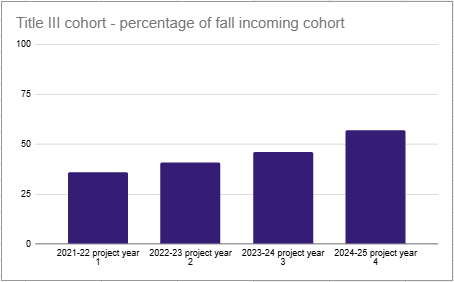
These data are derived from following a fall cohort of students each year that exhibit qualifying factors of first-time ever in college, full-time attending, low-income students.
Goals and Planning
Through research and strategy, the following Outcomes will determine the progress for planning and institutionalization of the goals of the grant:
- Increased retention rates for low-income and first-generation college students
- Increased course success rates in college-level math and writing for low-income and first-generation college students
- Increased three-year graduation rates (on time graduation rates for 2-year degree completers)
- Increased percentage of first-time, full-time low-income and first-generation students completing a First-Year Experience (FYE 100) course
- Increased percentage of first-time, full time low-income and first-generation students selecting a program pathway by the end of their first semester
- Increased percentage of students placed out of developmental education that take college-level math and writing in their first year
- Increased percentage of students receiving tutoring and mentoring that remain in good academic standing
- Increased percentage of students taking hybrid courses that express satisfaction with the course modality
- Title III priorities are embraced institutionally and reflected in the College Mission & Vision
- Mission - CGCC prioritizes access to education, empowers all students through learning, and drives inclusive prosperity throughout our community.
- Vision - CGCC innovates and excels, champions equity and inclusion, and nurtures belonging among our students, employees, and the community.
College Strategic Planning is shaped around the tenets of the Title III grant - CGCC prioritizes educational equity by:
- Ensuring equitable access to education
- Advancing equitable student learning and educational outcomes
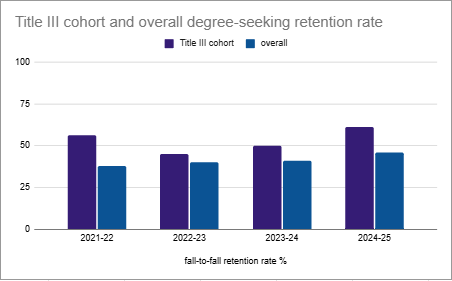
Although the Title III cohort retention rate has varied during the project period, the data reflects positive achievements for improved fall-to-fall retention for degree-seeking students.
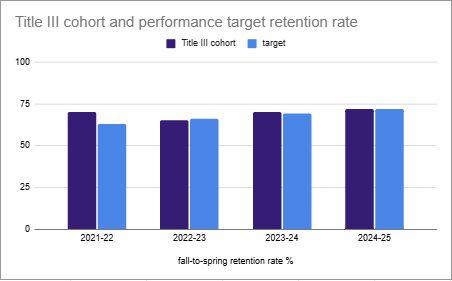
For fall-to-spring retention rates, the Title III cohort is on track with meeting projected goals and target measures.
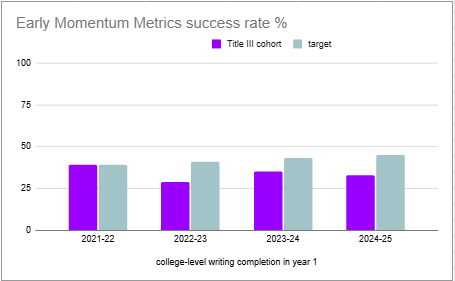
Although the Title III cohort college-level writing course completion success rate below anticipated targets, these data from the Title III cohort reflect near matching success rates compared to community colleges* in Oregon. According to the Oregon Community College Student Success Dashboard, overall success rates in college-level writing for students at CGCC at the end of the project period show 41% success. (*source: thecube.linnbenton.edu)
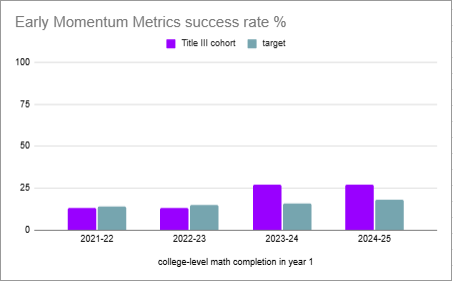
Title III cohort college-level math course completion success rates exceeded anticipated targets for the project period. These successes are attributed to small class sizes, corequisite lab supports, and updates to course materials.
Comprehensive Implementation Strategy
Promoting Access to Student Success (PASS) serves to provide students with immediate access to campus resources and staff. Through self-referral or recommendations, this Early Alert System connects students to supplemental instruction, tutoring and mentoring, academic advising, counseling, and other resources to support basic needs and health and well-being.
CGCC is a member of Oregon Community College Association Guided Pathways Cohort C (2020-2021) working on Introducing Guided Pathways to the College Community. Establishing Pathways Advising at the college provides students with access to academic advisors specializing in particular degree and career pathways. Other initiatives for the work of Guided Pathways at CGCC include: Student Services Redesign, First-Year Student Experience, Pathways and Mapping, Developmental Education Redesign, and Faculty and Staff Professional Development.
As a course for first-time ever in college students, FYE 100 helps students with improving their ability to succeed. Through increasing the ability for students to feel a sense of belonging to the college community, they build college success skills and participate in group service projects. This course supports students in navigating the institution and its resources, and prepare for their college journey.
For the new PASS program launch this year, two features were added. A universal use form was created for submitting referrals. The form allows students to initiate self-referrals for assistance. Users in the new system ranged from faculty, staff, and self-referrals from students. Faculty referred students at 77%, staff at 6%, and students self-referred for connections to assistance and campus resources at approximately 17%.
A student is connected to a Student Success Navigator when they are referred to Promoting Access to Student Success (PASS) to help identify what resources may best support their needs. For this year of the grant, 45% of students referred to PASS were identified as needing Tutoring Services. The Title III grant provides a Bilingual Tutoring and Mentoring Services Coordinator and Faculty Tutors to meet these needs and help students achieve academic success.
CGCC participated in an all-campus Guided Pathways Summit, February 2022. Highlights from this convening include the following goals:
- Strategic Goal: Total Alignment of Instructional and Student Services
- Student Services Redesign (ongoing)
- Pathways & Mapping (in development)
- Developmental Education Redesign (implementation and evaluation)
- First Year Experience (implementation and evaluation)
- Professional Development (ongoing)
As a course for first-time ever in college students, FYE 100 helps students with improving their ability to succeed. In Year 1 of the grant, 10% of the First-Time Ever In College student cohort completed FYE successfully.
At CGCC students have access to in-person and virtual tutoring options. In general, students access tutoring resources for math and writing support, but tutoring in most all subjects is available through virtual tutoring options.
Enhanced Academic Assessment Coordination is funded under the Title III grant to ensure continuous improvement of teaching and learning at course, degree, certificate and program levels.
Faculty Professional Development researched topics based on institutional goals and needs as indicated from faculty peers. Workshops and Coffee Hours Highlighted topics of interest and evolved into the proposal of a Teaching and Learning Center located in the Library Learning Commons on the Main Campus. A dedicated resource page was updated and added to the website to assist faculty in accessing resources. Faculty onboarding was reviewed and updated to help with training for new faculty.
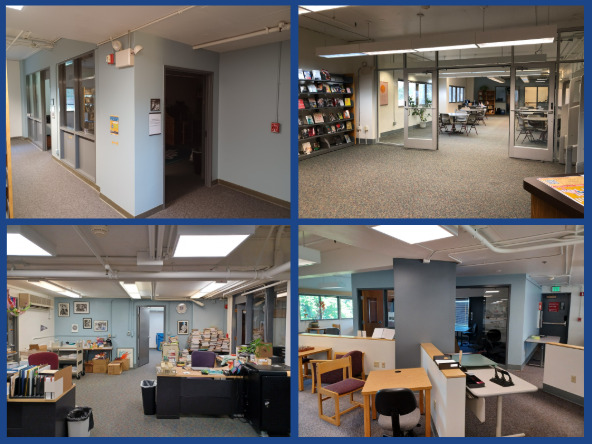
- Tutoring Center renovations
Efforts to improve student spaces throughout the college, the Title III grant provides funds to improve spaces to be more welcoming and student-friendly.
Continuous improvements to the PASS Early Alert program were added to include automatic messaging features and designated assigned response. Students referred by PASS are connected with resources to support their needs.
Ongoing work in key areas of Guided Pathways implementation includes full scale developed corequisite courses for both developmental and college-level gateway math and writing courses. CGCC Pathways were investigated for additional key gateway coursework to help highlight where students may need access to supplemental instructional support and access to additional resources. Support staff planned regular classroom visits for these courses identified to introduce themselves directly to students and create a welcoming culture for new students on campus. For Technology and Trades programs, most all math courses were aligned to a singular college-level math course to help provide students with better access to degree completion and access to future transfer options.
As a course for first-time ever in college students, FYE 100 helps students with improving their ability to succeed. In Year 2 of the grant, approximately 4% of the First-Time Ever In College student cohort completed FYE successfully. Redesign of this course is in progress with a revised plan for implementation fall term 2024.
At CGCC students have access to in-person and virtual tutoring options. In general, students access tutoring resources for math and writing support, but tutoring in most all subjects is available through virtual tutoring options. Additional resources for connecting students to tutoring and mentoring services were added this year. Development of Peer Tutoring and Mentoring training by a cross-functional collaborative team was completed in preparation for program launch in the next year.
Enhanced Academic Assessment Coordination is funded under the Title III grant to ensure continuous improvement of teaching and learning at course, degree, certificate and program levels. Several Degree and Certificate Outcomes Assessment Reports were completed and posted. Training for Faculty, process, and results were provided for instructional departments throughout the college.
Faculty Professional Development researched topics based on institutional goals and needs as indicated from faculty peers. Workshops and Coffee Hours Highlighted topics of interest and the theme for this year was Accessibility and Disabilities Services Training for Faculty. Several opportunities were presented for faculty to participate in training opportunities and interdepartmental discussions with Student Support Services and Disabilities Services to learn ways to broadly offer accommodations and methods of accessibility within an instructional delivery framework to promote access and student success. Additionally, the Faculty Handbook was revised and updated and the new faculty onboarding plan was implemented.
Under the Title III funding, IT Services offered enhancement to college technology and infrastructure particular to classroom technology and WiFi systems throughout the college. Upgrades to classroom technology are ongoing. A new support ticket request system was implemented to help expedite solutions and directly connect faculty to the designated Title III IT Coordinator for focused support in instructional delivery with the use of newly implemented technology tools and systems.
Improvements in retention rates show success in part to the attention and modifications to the Early Alert program throughout the project period. Students referred by PASS are connected with resources to support their needs for increasing their success and persistence.
CGCC joined the National Center for Inquiry & Improvement Rural Guided Pathways Project to continue the work of refining Guided Pathways implementation. This support network will enhance the efforts and provide resources to maintain the structure that Guided Pathways provides.
As a required course for first-time ever in college students, FYE 100 helps students with improving their ability to succeed. In Year 3 of the grant, approximately 15% of the First-Time Ever In College student cohort completed FYE successfully. Increased success for students taking this course is reflected in overall success and improved retention rates.
At CGCC students have access to in-person and virtual tutoring options. In general, students access tutoring resources for math and writing support, but tutoring in most all subjects is available through virtual tutoring options. Additional resources for connecting students to tutoring and mentoring services were added this year. Peer Tutoring and Mentoring was added as a resource for students to connect with peers in year 4 of the grant award.
System enhancement for Academic Assessment Coordination through the Title III resources ensures an improved process for continuous improvement of teaching and learning at course, degree, certificate and program levels.
Faculty Professional Development has remained an integral part of peer coordinated collaborative opportunities for faculty at CGCC as a result of the Title III funded activities. For year 4 of the grant, enhancements to the Faculty Evaluation forms and process were successfully implemented in addition to several opportunities for faculty to explore professional learning opportunities together on relevant and timely topics.
In the final year of the Title III grant award, eleven classrooms were completely renovated with new enhanced technology for hybrid and remote instructional delivery. Completing this activity ensures that students will be supported with flexible options for attending classes. It also provides instructors with options for instructional delivery.
Point-to-point remote access for the two campus locations to meet virtually together are an additional feature that provides more opportunities for collaboration among instructors and their classes. This successful achievement shows promise for establishing a better sense of belonging through improving large group attendance for campus-wide meetings and engaging group activities for students.
Due to federal determinations, the Title III project at Columbia Gorge Community College was issued a non-continuance notification for the fifth and final year of the project. For four years, federal guidance through the Department of Education along with internal research tied to specific goals and objectives yielded positive results and systems improvement to carry forward.
Ending early limited the scope of the project, but the achievements show notable success of how federally sponsored funding and guidance provided by Title III Part A Programs - Strengthening Institutions (SIP) serves to uplift postsecondary institutions through internal evaluation and cross-functional collaboration among team members. CGCC celebrates the success of this Title III project for building equitable access and success for all students.