Education & Social Science Pathway
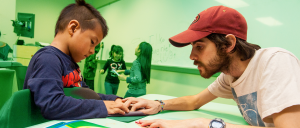
What is the Education and Social Sciences pathway?
The education and social sciences pathway is a broad academic route that encompasses fields related to education, psychology, sociology, anthropology, political science, and other social sciences. This pathway focuses on the study of human behavior, societies, and the processes that shape them. It typically involves understanding social, cultural, and political dynamics, as well as examining educational systems and learning processes.
Education and social sciences programs often offer a variety of specializations, including early childhood education, special education, counseling, social work, international relations, public policy, and more. The pathway prepares individuals for careers in education, research, policy analysis, counseling, social services, community development, and various roles within the public and private sectors.
Programs in the Pathway
Associate of Arts Oregon Transfer
Embark on a comprehensive academic journey with our Associate of Arts Oregon Transfer degree. This program provides a solid foundation in the arts, humanities, and social sciences, allowing you to explore various disciplines and prepare for a seamless transfer to a four-year institution to continue your studies.
Associate of Arts Oregon Transfer - Elementary Education
Start your journey towards becoming an educator with our Associate of Arts Oregon Transfer - Elementary Education Major Transfer Map (MTM). This MTM provides a seamless transition to four-year universities, enabling you to pursue a bachelor's degree in education while building a solid foundation in the social sciences.
Early Childhood Education
CGCC's ECE program can help you enter the rewarding field of Early Childhood Education, learning the skills required for placement on the National Registry and working in a variety of professional settings.
Human Development and Family Services
Consider a future in which you support children, families, and people in general. The Human Development and Family Services program can open doors to a future in social services, healthcare, education, counseling, and public policy.
Psychology
The Major Transfer Maps in Psychology prepare students for transfer to universities and upper division study in this exciting field of human understanding.
Sociology
If you are fascinated by human society, social interactions, and cultural structures, Sociology may very well be the right program for you.
Teaching & Learning
CGCC’s philosophy for Elementary Education is to create an environment that allows for supervised exploration in settings that are both meaningful and realistic. With a belief that learner-oriented teaching promotes the most enduring learning, our small classes ensure one-to-one opportunities both on campus and on-site in an elementary classroom. Our goal is to transfer an active learner with the goals of becoming an elementary education instructor, strong in the basics we have taught them, and able to incorporate into the university program smoothly.
The current philosophy of the Social Sciences Department is to promote an understanding of the world, human interaction, cultural diversity, and cultural heritage, and to equip students with the knowledge and understanding of the past, which is essential for coping with the present and planning for the future. Social Science involves both describing the assumptions and practices within social science fields, such as sociology, psychology, economics, and anthropology, and critiquing these to enhance the understanding of human behavior and social phenomena. Key topics include the nature of social reality (ontology), how we know it (epistemology), the appropriateness of scientific methods, and the role of values and objectivity in social inquiry. The social sciences treat critical thinking and problem-solving as integral parts of the required rigor in all areas of the social sciences and the courses offered.