Research Guide: Celebrating Diversity
Celebrating Diversity in the United States
We live in a global village comprised of people from a vast multitude of races, ethnicities, cultures, and diverse socio-economic backgrounds. Using CGCC Library resources and other, freely accessible Internet sites, this research guide celebrates the diversity you represent.
*Please note this is in progress. Many more topics are to come, and we welcome any suggestions and contributions you'd like to send to library@cgcc.edu.
Black History Month
National Annual Commemorative Observances - February
Through the Association for the Study of Negro Life and History, Historian and author Carter G. Woodson selected the week in February that included the birthdays of Abraham Lincoln and Frederick Douglass to serve as "Negro History Week" in 1915. Today, Dr. Woodson's organization is known as the Association for the Study of African American Life and History External (ASALH).
Black History Week was first acknowledged presidentially by Gerald Ford in 1975, when the president urged Americans to "recognize the important contribution made to our nation's life and culture by black citizens." The following year, ASALH expanded the commemoration of Black history in the United States to the month of February.
National Black History month was recognized by Public Law 99-24 in 1986. This law directed the president to issue a proclamation calling on the people of the United States to observe February 1986 as Black History Month and to celebrate it with the appropriate ceremonies and activities. In accordance with this law, President Reagan issued Presidential Proclamation 5443, which proclaimed that “the foremost purpose of Black History Month is to make all Americans aware of this struggle for freedom and equal opportunity.” Reagan's proclamation stated February was a time “to celebrate the many achievements of African Americans in every field from science and the arts to politics and religion."
Since 1996, presidents have continued to issue annual proclamations for National Black History Month. In 1996, President Clinton issued Presidential Proclamation 6863 to emphasize the achievements of Black women from Sojourner Truth to Mary McLeod Bethune and Toni Morrison, which was the annual theme for Black history month celebrations that year.
Since 1996, Congress has continued to pass resolutions that honor Black History Month. Today, national organizations like The Library of Congress, National Archives and Records Administration, National Endowment for the Humanities, National Gallery of Art, National Park Service, and the Smithsonian Institution join American people to pay tribute to the generations of African Americans who have and continue to struggle for equal opportunity.
Resources:
Library of Congress (2023). Black History Month: A Commemorative Observances Legal Research Guide. https://guides.loc.gov/black-history-month-legal-resources/history-and-overview
At the CGCC Library, we order new books all the time. Below is a list of some of our newest titles. If you don't see what you're looking for, try searching our catalog. You are also welcome to email collection development suggestions to library@cgcc.edu.
Nonfiction
- "The Fire Next Time" James Baldwin
- "Between the World and Me" Ta-Nehisi Coates
- “Stand Your Ground” Kelly Brown Douglas
- “We are never meeting in real life” Samantha Irby
- "How to Be an Antiracist" Ibram X. Kendi
- "This Bridge Called My Back: Writings by Radical Women of Color" Cherríe
Moraga & Gloria Anzaldúa - "So You Want to Talk About Race" Ijeoma Oluo
- "Just Mercy: A Story of Justice and Redemption" Bryan Stevenson
- “The Dark Fantastic” Ebony Elizabeth Thomas
Fiction
- "Things Fall Apart" Chinua Achebe
- "Their Eyes Were Watching God" Zora Neale Hurston
- "The Bluest Eye" Toni Morrison
- "White Teeth" Zadie Smith
- "The Underground Railroad" Colson Whitehead
Poetry
- “The Crown Ain’t Worth Much” Hanif Abdurraqib
- "I Know Why the Caged Bird Sings" Maya Angelou
- "Citizen: An American Lyric" Claudia Rankine
- “For Every One” Jason Reynolds
Arts
- "Black Hollywood : reimagining iconic movie moments" Augustus Carrell
- “The Obama Portraits” Taína Caragol
- “Kehinde Wiley: A New Republic” Eugenie Tsai and Connie H. Choi
- “Jubliee” Toni Tipton-Martin
- “The Cooking Gene: a journey through African American culinary history in the Old South” Michael W. Twitty
DVDs
- “Greenbook” (2019)
- “Black Panther” (2018)
- “Blackkklansman” (2018)
- “The Hate U Give” (2018)
- “Get Out” (2017)
- “Hidden Figures” (2017)
- “Moonlight” (2017)
- “For Colored Girls Who Have Considered Suicide When the Rainbow Is Enuf” (2002)
1. Getting Started
General Subject Research Databases contain a lot of information about Black history. You can use resources like Academic Search Complete, Google Scholar, or Points of View to get started. Consider trying keywords from this Black History Vocabulary List.
2. Going Deeper
Once you have a good grasp on the basics, try looking into some of our more specialty databases. The following list includes databases that are specifically dedicated to Black or African American research and history.
African Journals Online (AJOL): the world's largest and preeminent platform of African-published scholarly journals. AJOL is a Non-Profit Organization that works to increase global & continental online access, awareness, quality & use of African-published, peer-reviewed research. *You must register for a free account to use this resource.
AfricArXiv: a community-led digital archive for African research, this database is working to build an African-owned open scholarly repository of scholarly works to catalyze the African Renaissance.
Black Freedom Struggle in the United States : challenges and triumphs in the pursuit of equality: provides access to a collection focused on Black Freedom, featuring select primary source documents related to critical people and events in African American history.
The Black Women Radicals Database: seeks to overcome the erasure of Black women’s political leadership, organizing, theorizing, and socio-political movement building in Africa and in the African Diaspora.
Independent Voices: an open access digital collection of alternative press newspapers, magazines and journals, drawn from the special collections of participating libraries. These periodicals were produced by feminists, dissident GIs, campus radicals, Native Americans, anti-war activists, Black Power advocates, Hispanics, LGBT activists, the extreme right-wing press and alternative literary magazines during the latter half of the 20th century.
Slavery and Abolition, 1789-1887: chronicles the African American experience during the 19th century. Many titles cover religion and literature, but the bulk are related to slavery and abolition, including titles such as the Freedmen's Record, Genius of Universal Emancipation, the Liberator, the Massachusetts Abolitionist, the Mirror of Liberty, and the National Crisis: An Antidote to Abolition Fanaticism, Treason and Sham Philanthropy.
It can be difficult to find information written from the perspective of groups who have been marginalized in research databases. This is because academia upholds a hegemonic power structure that reinforces a common narrative, and that narrative is reiterated through the processes by which research is deemed 'credible.' The good news is, information on the general web can be just as credible as our research databases. Just remember to evaluate your source carefully.*
Here are some suggestions for places you might find credible research:
BET: home for all the latest celebrity, music, fashion, entertainment and African-American news.
Ebony Magazine: shines a spotlight on the worlds of Black people in America and worldwide. Our commitment to showcasing the best and brightest as well as highlighting disparities in Black life has been, and will always be, cornerstone to Ebony.
NBCBLK: tells “stories by, for, and about the black community” with the goal of “elevating America’s conversation about black identity, politics & culture today.”
The Root: “provides an unflinching analysis of important issues in the black community through insightful and savvy commentary from black thought-leaders.”
*Need help? There are tips for Evaluating Information on our site! Remember, credibility is subjective. Apply the general guidelines we've provided in a way that makes sense with your research.
Poetry Profiles
-a collaboration by Leigh Hancock's ENG 106: Introduction to Poetry students
Jericho Brown
April 14, 1976-

Three Things to Know about Jericho Brown:
- In 2019 Brown received the Pulitzer Prize for his collection of poetry called “The Tradition”. This collection was raved highly about by many critics. Jericho Brown is the first gay black man to win the Pulitzer Prize. (Jericho)
- Jericho Brown has worked as an educator at the University of Houston, the University of San Diego, San Diego State University, and he is currently the director of the Creative Writing Program and a professor at Emory University. (Poet)(Jericho)
- Jericho Brown has HIV. Instead of giving into the stigma of the virus and concealing it, Brown writes poems about it such as “The Virus”. People with HIV are stereotyped and generally treated poorly, in his poetry Brown addresses the issue instead of avoiding the topic.
Showcased Poems:
- “Thrive”
Jericho Brown’s poem “Thrive” was written for a Poetry In Place symposium in 2014. Addressing his home, the South, Brown questions the reason why slavery is not universally viewed as bad, why other aspects of society that show distinct similarities to slavery are viewed as normal, and why it is important for him to write about it.
Comparing the current prison system to slavery Brown writes that he will not consider the South changed until it is able “to admit that someone benefited from slavery and that, today, someone’s descendants benefit from a system that looks a hell of a lot like slavery.”() Throughout the poem, Brown makes this comparison to bring a modern perspective to discrimination in the south. Exemplifying both issues he reinforces that because of factors out of his control he is “at risk”()
From the South originally, Brown faced adversity for being black and being gay. Writing “My South made me, in spite of itself. I love it because it is mine. But I’ll never know that it loves me, though I do belong to it”(), Brown describes what it feels like to call a place that does not welcome you home. Further addressing this issue he writes, “Now—what is the value of my life where I’m from, where I intend to thrive, where I’ve chosen to die?”() The South is his home, his birthplace and where will choose to die, and in this poem he questions whether or not he will ever be welcomed, accepted, or even valued as a human. Brown state’s that “You don’t get to be a poet without publicly asking questions that people say it’s rude to answer in public.” Implying that as a poet, it is his obligation to address the possibly controversial topics.
"Dear Dr. Frankenstein" is a poem by Jericho Brown that was first published in The Missouri Review in 2014. The poem later appeared in Brown's 2019 Pulitzer Prize-winning poetry collection, "The Tradition." The poem explores themes of creation, loss, and the limitations of human agency, drawing on the myth of Frankenstein's monster as a metaphor for how life is unpredictable and uncontrollable.
Brown Starts the poem by addressing with confidence how he is aware of “the science of building men” as the poem continues we start to see how easily this idea falls apart as we carelessly ignore different parts of people and their own free will.
The poem has a consistent rhythm and meter. The poem also has a few internal rhymes, such as "fragments in little light" and "nothing taken gently." These techniques create a sense of stability and order, which contrasts with the chaotic and unpredictable nature of the men Brown creates.
Brown finishes the poem with a strong line that really echoes through our thoughts and makes us reflect on the fragility of our lives. It makes me think about how our ego often gets in the way of the things that really matter. Brown ends it with “Nothing we erect is our own.”
“The Water Lilies” by Jericho Brown is one of the poems in his newest collection “The Tradition”. This poem aims to poke at peoples beliefs of how racism is. It seems to say that small changes are unimportant changes and that if change is going to happen, it needs to be big. In the poem it says “"If you ask me. If you ask me, I’ll say no, Thank you, I don’t need to watch what goes", pointing out that Brown is skeptical of watching these “changes” because they are almost nonexistent. With the use of a metaphor, comparing a “white” race to a flower that is white in color, he gets his point across without mentioning it outright. At the end of the poem, he makes his point by actually mentioning race, so that the reader can read the entirety of the poem with race in mind. This poem borders on the line of a call to action, by talking about how little action is being done to fix the past. The tone of the poem seems to come across as sarcastic or cynical, making the reader believe that the author wants actual change to happen, not just what is being said.
Main Focus/Power/Purpose:
Jericho Brown's poetry often focuses on themes of identity, race, sexuality, and masculinity. His work also delves into personal experiences and relationships, often exploring the complexities of love and desire. Brown's poetry has been praised for its powerful and provocative nature, its use of vivid imagery, and its ability to evoke strong emotions in readers.
One of Brown's main purposes in his poetry is to challenge and confront what we as a society consider normal, especially those surrounding race and sexuality. His work often explores his life and perspective as a Black gay man in America and the way in which society's discrimination and prejudice can impact our sense of self.
Through his poetry, Brown fights to make a better world by bringing to light the struggles in our current society. Striving to make it easier for future generations to not have to grow up in a society like the one we have today.
Who Might Enjoy Jericho Brown:
Jericho Brown’s poetry is for anyone and everyone. His poems are powerful, poignant and thought-provoking works of literature. He has a unique style of writing, which is both accessible and deeply moving. Readers who are interested in social justice, identity, and sexuality would be particularly drawn to his work as these are often the subjects of his poems. Writing to invoke thought, change, and self-reflection, anyone who is searching for ways to broaden their perspective or better understand themselves and others should give his work a read.
Jericho Brown's poetry is recommended for anyone who enjoys literature that is moving, thought-provoking, and beautifully crafted. Anyone who is black, LGBTQ+, or oppressed in general may feel heard and validated with his craft. Addressing the issues and the oppressors Brown demands to be heard. For these reasons Brown’s poems may be particularly enjoyable for those who are younger, open minded, or willing/wanting to change their perspective.
Learn More about Jericho Brown:
- Poetry Foundation: The Poetry Foundation is a comprehensive resource for poetry lovers, and it has an extensive collection of poems and biographical information on poets. You can find several poems by Jericho Brown on their website, along with a biography and critical analysis of his work.
- NPR: NPR has featured Jericho Brown in several interviews and readings of his work.
- YouTube: Several videos are available on YouTube featuring Jericho Brown's poetry readings and interviews. You can watch his TEDx talk where he shares his journey as a poet and talks about the power of poetry to connect with others.
- Social Media: Jericho Brown is active on social media platforms such as Twitter and Instagram. He regularly posts about his work and shares updates on his projects and appearances. Following him on social media can give you a glimpse into his personal life and upcoming events.
Ada Limón
March 28 1976 -
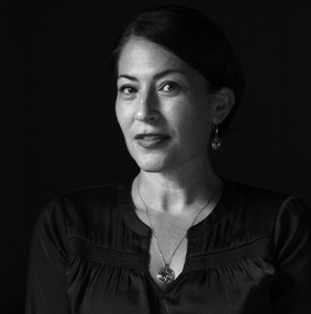
https://poets.org/poet/ada-limon (Ada Limón)
Three Things to Know about Ada Limón:
- She has won the National Book Critics Circle Award for Poetry with the Poem, “The Carrying.” (JB)
- In July 2022, Librarian of Congress Carla Hayden appointed her the 24th United States Poet Laureate for the term of 2022-2023.(AO)
- In 2013, Limon judged the National Book Award for Poetry. (CS)
Showcased Poems:
In Ada Limon's poem, "Give Me This" there was a lot of descriptive wording in the poem. The poem gave a kind of a simple read, as there was no rhyme scheme, it seemed like a small descriptive story. The title itself gave off a message like someone is taking something demandingly, rather than asking for it. At first, Limon described the object as the neighbor's cat coming to clean the robins in their nest, which seemed a little sad to hear at first. Then after observing more, the animal seemed to be a groundhog, stealing the tomatoes, and eating them in the early morning. It seemed that they were surprised to see the groundhog, not expecting it. Limon describes the person who saw the groundhog having a "small spasm of joy," something that they did not think they would have when they first woke up in the morning. The last line "She is a creature and earnest, / and she is doing what she can to survive" indicates that the human is not mad that the groundhog was dealing with the vegetables. The word “thieving” in this poem, seems to have a light tone, rather than a harsher tone. This poem seems to praise the animals and nature throughout and it seems to influence the reader to do the same. (JB)
“Salvage” by Ada Limon is sorrowful, but a stoically honest poem about nature and the human condition. The setting and subject are; “On the top of Mount Pisgah, on the western slope of the Mayacamas, there’s a madrone tree“ (Lines 1-3). Mount Pisgah is a mountain in Oregon and is so named after a mountain named Pisgah in the Old Testament of the Bible. Mardone is a type of evergreen tree native to the western coast of North America. This tree is half scarred and burned black by flame “One side of her is black ash and at her root is what looks like a cavity that was hollowed out by flame” (Lines 4-7). This is in contrast to its other side that is lush and lively. “On the other side, silvery green broadleaf shoots ascend toward the winter light”(Lines 7-9). This imagery made me sad as the destruction, even partial, of nature deeply bothers me. In a way it also makes me marvel at nature, being so resilient as She is. The subject of the poem is very moved by the sight of the madrone tree and stares at it for a long time. This strikes me as important seeing in this busy life it is easy to get so caught up in life we forget about our relation to the planet and our ultimate actions. It seems the subject of the poem longs for this child-like innocence as well; “I am reminded of the righteousness I had before the scorch of time. I miss who I was” (Lines 13-14). I think the subject of the poem is reminded of when she was a child and saw the world in a much different light. However, after years of growing up in a society that only views nature as resources, they have become jaded and conformed to the norm. As the ending of the poem states nevertheless the only thing we can do is apologize to ourselves, because we are like the tree. (AO)
The poem “Sharks in the River” by Ada Limon contains a lot of imagery that helps to emulate the idea that Limon is trying to get across, and that idea is this: to grow as a person, one has to confront their fears. Throughout the poem, Limon uses sharks as a metaphor for her fears. The lines, "Sharks bite fewer people each year than New Yorkers do, according to Health Department records." (Lines 20-21) do an excellent job of showing an example of the imagery that Limon uses to represent her fears. Later in the poem, Limon uses metaphoric imagery to represent the conquering of her own fears, again using the metaphor, but this time of ghosts, for her own fears, "I want to walk through this doorway But without all those ghosts on the edge, I want them to stay here. I want them to go on without me. I want them to burn in the water." (Lines 33-37) This is another example of how Limon weaves a tapestry of imagery to get her point across. I think that this poem truly does illustrate the theme of confronting ones' fears, as well as showcase Limon's wizardry with the English language. It is also worth noting that throughout many of her poems, Limon uses allusions to nature to help get her points across. This allows people to relate whatever she is saying to something that they know, in a bid to understand it better. In this poem, she mentions the burning of grass to add an air of drama, and her main cast member of course, is the shark, which she unsurprisingly uses to represent fear. (CS)
Main Focus/Power/Purpose:
Limóns’ primary purpose of poetry seems to define the beauty of nature within her poems. She likes to create a connection between a person and the act of nature, and build upon it throughout her poems. In her poems, she wants to fully describe nature with very intriguing descriptive words, making it the main focus of the poem as they stand out (JB). Another goal that Limon is attempting to achieve via her poetry, is spreading the message of love throughout her audience. Love for others, love for yourself, and most of all, love for nature. Through this message and her poetry, she is attempting to achieve a greater level of understanding for human nature, as well as a greater understanding for the world around us, and how those two things tie together. (CS) As well as the aforementioned, Ada Limon’s purpose is to create an atmosphere of intimacy with readers through her great emotional sincerity and insightful and keen observations of nature and humans' place amongst it. She also is a proponent of living your dream, or doing what makes you happy as her father died of colon cancer at fifty one making her reconsider her career and move to Kentucky to write poetry full time. Limons power, it could be stated, comes from her candor, tackling diverse and semi taboo subjects in her poetry such as infertility, aging parents, and chronic pain. Another form of power that stems from Limon would be her willingness to experiment, in one of her books breaking the fourth wall and commenting on the writing of poetry and its meaning. An area of focus for the poet would be giving readings and teaching poetry. In 2014 she began teaching in the master of fine arts in creative writing program at Queens University of Charlotte, North Carolina. Librarian of Congress Carla Hayden, who chose Limón as the laureate, described her as “a poet who connects. Her accessible, engaging poems ground us in where we are and who we share our world with. They speak of intimate truths, of the beauty and heartbreak that is living, in ways that help us move forward.” (AO)
Who Might Enjoy Ada Limón:
It might seem like people of all ages might enjoy her poems. Some are kid-friendly, but also some are not. People that enjoy nature will be ecstatic for her, with the ways she describes nature. People that like Animals would also enjoy some of her work also. (JB) Limon uses imagery and metaphor and allusion to get her point across, so those who have a bright imagination and ability to visualize what they’re reading, such as seeing images of nature and relating them to introspective views of one’s inner self. (CS) People of all ages would enjoy the poetry of Ada Limon, her appeal is widespread. Anyone who has a connection to nature or cares for the environment as stated above would garner much enjoyment from her work. Also those that are concerned with climate change and the effects it is having on our earth would do well to take notice. This medium is a great way to raise awareness to an incredibly important matter in our world today. Her poetry may speak to some in a unique, significant way that other mediums of trying to educate and raise awareness about climate change could not. (AO)
How to Learn More about Ada Limón:
You can learn more about her on her webpage. (Ada Limón) She also has many books with her poems in there, including, The Hurting Kind, The Carrying, and Bright Dead Things, which are linked here. (Book) Limón was a host of a podcast, called, “The Slowdown” (The Slowdown) which streams on all social media platforms. She also makes several appearances on online poem websites. Some great resources where you can also find some of her work are the Poetry Foundation (“Ada Limón”), Poets.org (Ada Limón), and once again her website. (Ada Limón) You can also learn about how she received the award, U.S. Poet Laureate, for the 2022-2023 year, linked here. (JB) Another great place to learn about Ada Limon is the great wealth of knowledge that is Wikipedia. There is a bunch of information available on Wikipedia’s page on Ada Limon, things about her life and career, as well as interesting quotes from her. Not only this, but you can also view the timeline of the awards and accolades that she has received over the years, which is quite interesting as you can click the link of each individual work and it will take you to its own separate page. This link will allow you to learn a lot about Ada Limon from a concise source. (CS) Britannica.com (link here) has a wonderful, comprehensive article on Limon. Her early years are well documented and not found in most sources. The article includes information about Limon’s parents and step parents, early childhood, education and love for drama as well. She worked in marketing to support her poetry and began publishing her work in books. (AO)
Amanda Gorman
March 7, 1998-

Three Things to Know about Amanda Gorman:
- First-ever National Youth Poet Laureate of the United States in 2017. This award is given to a young adult or teen who displays skill in poetry or spoken word, is an exemplary leader, and is committed to social justice and/or is an activist in civic discourse and advocacy (2022, Wikipedia.)
- She has performed in many prominent venues like the White House, Super Bowl, and Library of Congress (Biography.com Editors.)
- She and her two siblings were raised by a single mother and Amanda had an "auditory-processing disorder" which led to her reading and writing poetry at a young age. (Amanda Gorman | Biography, Poems, Book, Inauguration, Twin Sister, & Facts | Britannica).
Showcased Poems:
"Chorus of the Captains" by Amanda Gorman is an inspiring anthem honoring the teachers, nurses, and leaders that have given their life’s work to helping their community during the Covid-19 pandemic. Gorman presented this poem during the 2021 Super Bowl, while the U.S was still fighting the outcomes of the Coronavirus. Gorman uses the example of three people, each with a distinct way of serving others, to provide a very personal connection with the audience.
She appeals to the pathos of the crowd by highlighting the sacrifices of a veteran: “James”, educator: “Tremaine”, and nurse: “Susie.” She explains that James shares ``his home with at-risk kids” among other great works. Gorman attentively draws the listeners in with a brilliant alliteration while she proclaims the work of a selfless teacher, Tremaine; he contributes his work by “providing his community with hot spots, laptops, and tech workshops”. Finally, nurse Susie is uplifted for her sacrificial work as she “fights to save other lives in the ICU battle zone” after losing both of her grandmothers to Covid. Indeed, these front-line workers are proven quality leaders by the honorary work they have accomplished.
Gorman ends her poem with this call to action:“Let us walk with these warriors, charge on with these champions, and carry forth the call of our captains. We celebrate them by acting with courage and compassion, by doing what is right and just. For while we honor them today, it is they who every day honor us.”
By exemplifying the work of these individuals, she upholds appreciation to all those who work for the greater cause of helping people through the pandemic. American citizens are brought together by this poem in recognition of the service of the workers who hold the wellbeing of many in their hands.
The poem "Earthside" by Amanda Gorman serves as inspiration for people to protect the environment in light of climate change. Gorman first starts by pointing out a moment in history, which is “On Christmas Eve, 1968, astronaut Bill Anders/ Snapped a photo of the earth/ As Apollo 8 orbited the moon” (1-3). This is when humans first viewed a picture of their earth called home and realized that there is only one home that has limited resources.
Gorman has only one line in the sixth stanza which is “Climate change is the single greatest challenge of our time” (28). Because Gorman wanted the reader to reflect on this line, she made the entire stanza a single line. Gorman states that it’s important to know this because “It’s getting the facts straight that gets us to act and not to wait” (32). Gorman makes it clearer that everyone should and can take care of our planet by saying “You don’t need to be a politician/ To make it your mission to conserve, to protect,/ To preserve that one and only home” (41-43).
The speaker also employs figurative language in the form of repetition in the lines “There is no rehearsal. The time is/ Now/ Now/ Now,” (52-55). The speaker's voice is passionate and strong and highlights that there is no time to waste.
Gorman ends the poem by saying “To keep rising up for an earth more than worth fighting for” (95). Only 55 years have passed since the first image of the earth was taken, at which point everyone understood that the planet needed to be protected. Gorman urges us to continue making changes and prevent the destruction of the environment.
The poem,“The Miracle of Morning” by Amanda Gorman is an inspirational poem written during the covid-19 pandemic when everyone had cabin fever, tired of wearing masks and feeling alone in their struggles, while watching friends, family and strangers battle a deadly and highly infectious virus. Gorman creates a voice of hope, unity, and healing throughout this stimulating poem, in hopes to plant the seed of societal growth in a time of chaos.
Hope is an essential part of the process of growth, in the fourth stanza Gorman stresses its importance with the couplet “So on this meaningful morn, we mourn and we mend. / Like light, we can’t be broken, even when we bend.” The second stanza is solely about hope as she takes notice of small but meaningful things that people are doing in spite of the situation. Gorman continues this trend of hope throughout the poem. The last line of the poem is used to insight hope with the words “In testing times, we became the best of beings.”
Unity and healing come hand in hand as this poem is read. Gorman stresses the importance of these two attributes together when she says “Our people have never been more closely tethered./ The question isn’t if we will weather this unknown,/ But how we will weather this unknown together.”(10-12) ”We, us " and"our " are frequently used in this poem to stress the importance of unity and words like “Tethered,”(10)”mend,”(13) and “solidarity”(22) are used as images of healing.
The most powerful lines of the poem are, ”So ensure that this ache wasn’t endured in vain: / Do not ignore the pain. Give it purpose. Use it.”(25-26) These lines are the fertilizer for the seed Gorman is trying to plant with a purpose of growing hope, healing and unity in our society.
Main Focus/Power/Purpose:
Gorman's purpose is to call to action, encourage, and inspire individuals in regards to social issues. Gorman is considered a poet activist. Her focus is generally confined to issues of oppression, race, and feminism ("Amanda Gorman"). One of Gorman’s most notable works is said to be the "The Hill We Climb" , which was given at the presidential inauguration of Joe Biden in 2021. "The Hill We Climb" is a poem in which Gorman acknowledges the past mistakes and defeats of America, yet she offers hope for the country to move forward in love or better yet to see that “there is always light, if only we're brave enough to see it.” (Foussianes). This poem is a good representation of her personal writing style and the kind of subject matter she talks about in her other poems. Gorman sums up her stance on the power of poetry in this quote from her: “Poetry is the lens we use to interrogate the history we stand on and the future we stand for.” (Harvey, 1).
Who Might Enjoy Amanda Gorman:
Amanda Gorman’s poetry can be enjoyed by the young, the seasoned, or anyone with an open mind who has a grasp on some of the current problems our society is facing and those who are ready for a change. These problems include climate change, covid-19 and the problems it has caused, feminism and racism. While reading her poems there is a tone that is either pleading, preaching, or demanding a change. Gorman’s passion for each of these subjects can be heard and felt while reading and listening to her poems.
She uses language that is easy to understand while applying the power of the metaphor and homonyms to make her reader think deeply about her messages. Gorman constantly changes her rhyme scheme throughout her poems to give each one a different rhythm which makes them pleasing and fun to read. She is a young ambitious writer who has just begun to show her potential and someone a fan could follow for years to come.
How to Learn More about Amanda Gorman
Gorman's three books:
Amanda Gorman's Book Information
- “The Hill We Climb”: An Inaugural Poem for the country is available in a collectible gift edition. Gorman is the youngest and sixth poet to perform a poetry reading at President Joe Biden's inauguration, and this edition of the book is especially cherished for that reason.
- “Call Us What We Carry”: A collection of poems by Amanda Gorman that explore several subjects, including loss and memory.
- “Change Sings”: A top-selling children's book. This book is to inspire children that they can do anything when a group of people comes together to demand change.
Gorman’s quotes:
- Amanda Gorman once said, “Do not ignore the pain. Give it purpose. Use it.”
Inspiring quotes: 31 Best Amanda Gorman Quotes on Light, Hope, & Change
Gorman recites her poems:
Gorman’s Articles:
- Amanda Gorman Interviewed by Michelle Obama | Time
- Amanda Gorman: Why I Almost Didn’t Read My Poem at the Inauguration - The New York Times
Works Cited
Ada Limon https://www.britannica.com/biography/Ada-Limon
Ada Limón. https://www.adalimon.net/.
“Ada Limón.” Poetry Foundation, Poetry Foundation, https://www.poetryfoundation.org/poets/ada-limon.
“Amanda Gorman.” Poetry Foundation, Poetry Foundation, 2023, https://www.poetryfoundation.org/poets/amanda-gorman.
Biography.com Editors. “ Amanda Gorman Biography.” Biography.com, A&E Networks Television, 2 Feb. 2022, https://www.biography.com/writer/amanda-gorman.
Books — Ada Limón. https://www.adalimon.net/books.
Brown, Jeffrey, and Alison Thoet. “Ada Limón on Becoming the New U.S. Poet Laureate.” PBS, Public Broadcasting Service, 27 July 2022, https://www.pbs.org/newshour/show/ada-limon-on-becoming-the-new-u-s-poet-laureate.
Foussianes, Chloe. “Amanda Gorman's Poem Stole the Show at the Inauguration. Read It Again Here.” Town & Country, ©Hearst Magazine Media, Inc., 2 Nov. 2021, https://www.townandcountrymag.com/society/politics/a35279603/amanda-gorman-inauguration-poem-the-hill-we-climb-transcript/
Harvey, Branden. “31 Best Amanda Gorman Quotes on Light, Hope, & Change.” Good Good Good, GOOD GOOD GOOD © 2015 – 2023, 29 Dec. 2021, https://www.goodgoodgood.co/articles/best-amanda-gorman-quotes-about-light-hope-and-activism.
“Meet the New U.S. Poet Laureate: Ada Limón.” The Slowdown, 12 July 2022, https://www.slowdownshow.org/story/2022/07/12/meet-the-new-us-poet-laureate-ada-limn.
Poets.org, Academy of American Poets, https://poets.org/poet/ada-limon.
“The Slowdown.” The Slowdown, 23 Feb. 2023, https://www.slowdownshow.org/.
Poets.org, Academy of American Poets, https://poets.org/poem/sharks-rivers
Wikipedia.org, https://en.wikipedia.org/wiki/Ada_Lim%C3%B3n#Poetry
Wikipedia, the free encyclopedia. “National Youth Poet Laureate.” Wikipedia, Wikimedia Foundation, 16 Oct. 2022, https://en.wikipedia.org/wiki/National_Youth_Poet_Laureate.
"Celebrating Diversity in the United States" was created by Tori Stanek with help from CGCC students. Unless otherwise noted, it is licensed under a Creative Commons Attribution 4.0 International License. You are free to copy, share, adapt, remix, transform, and build upon the material for any purpose, even commercially.
